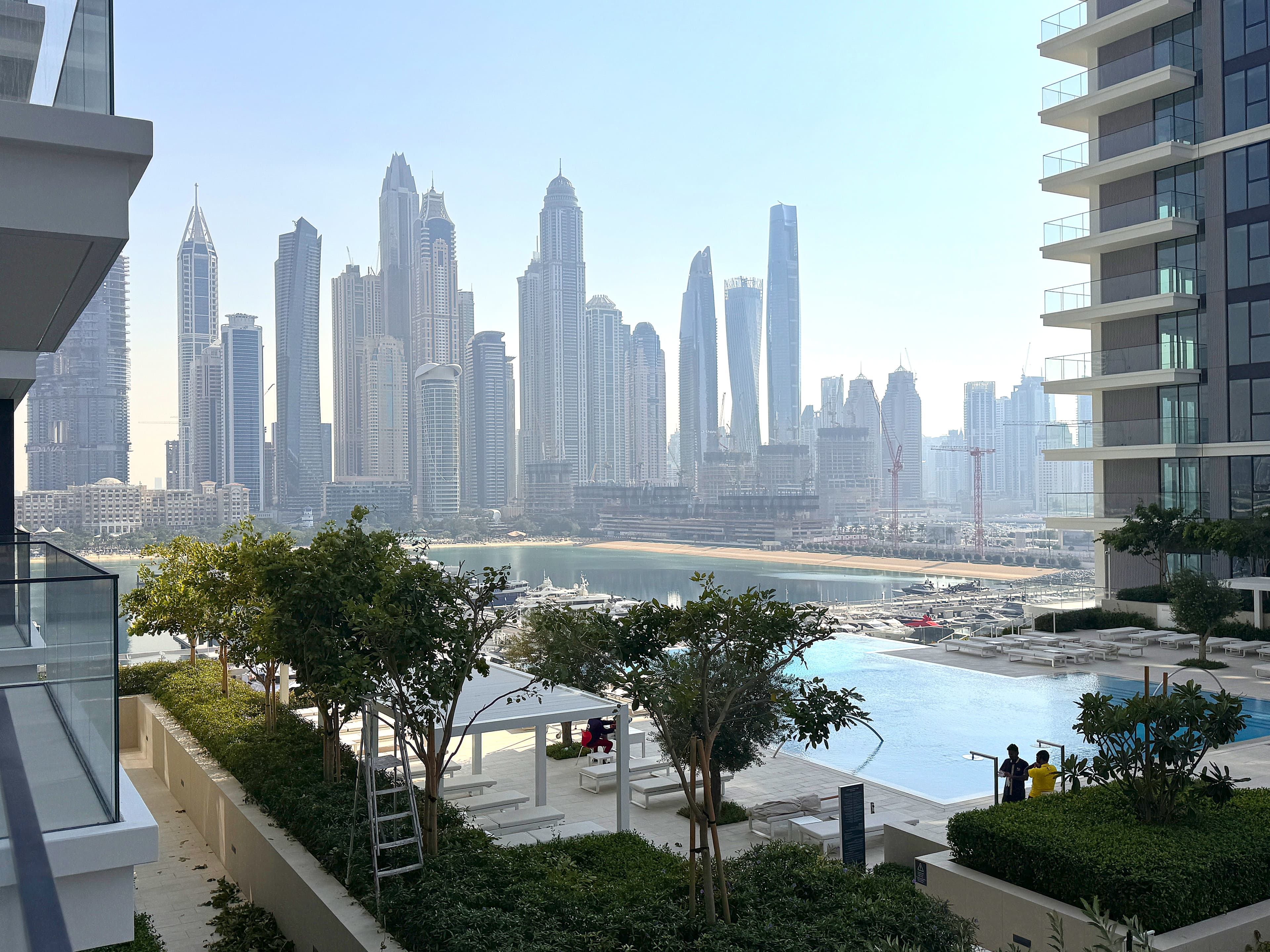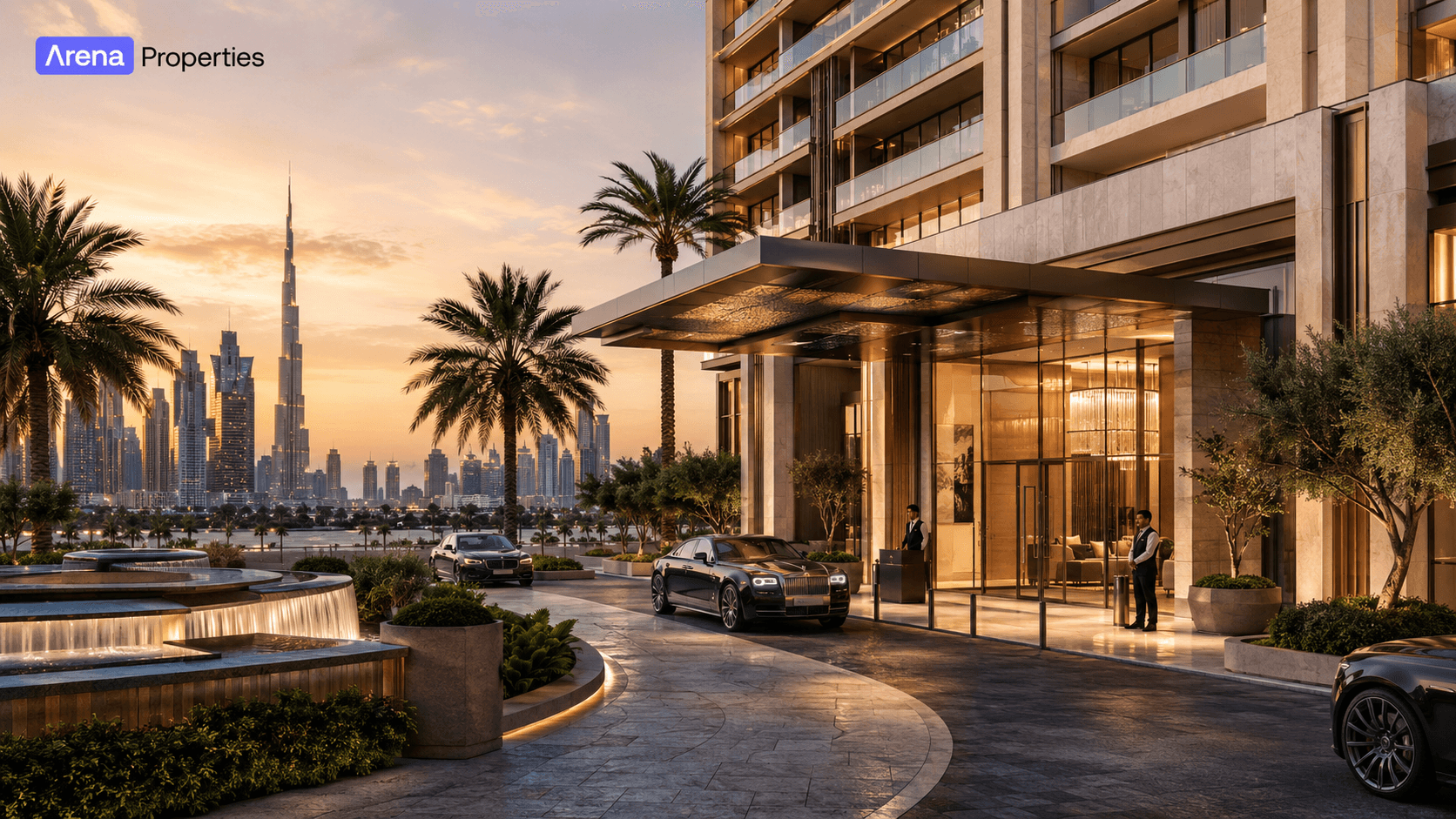
Branded residences in Dubai attract investors looking for premium properties that combine high-quality real estate with the reputation, design standards, services, and lifestyle associated with an established brand. These developments may be connected to international hotel groups, luxury designers, automotive brands, fashion houses, or other recognized names.
For investors, the appeal often extends beyond the apartment or villa itself. The brand can influence the project concept, resident experience, amenities, service standards, international visibility, and perception of quality.
However, a recognized name does not automatically make every branded residence a strong investment. The final result still depends on location, developer quality, operating standards, ownership costs, rental demand, resale potential, and the premium paid for the brand.
This guide explains how investors should evaluate branded residences in Dubai, including the potential advantages, additional costs, different brand models, ready and off-plan options, and the factors that can influence long-term value.
Quick Answer: Are Branded Residences in Dubai Worth the Investment?
Branded residences in Dubai can be attractive for investors who value premium positioning, service quality, international recognition, lifestyle appeal, and access to a specific segment of tenants and buyers.
A strong branded residence should offer more than a famous name. The development should combine a desirable location, credible developer, clear brand involvement, high construction quality, suitable amenities, professional operation, and genuine demand.
What Is a Branded Residence?
A branded residence is a residential property developed in association with a recognized brand.
Some projects are connected to international hotel groups. These residences may provide access to hospitality-inspired services, resident facilities, and operational standards associated with the hotel brand.
Other developments may be linked to fashion, automotive, interior design, or lifestyle brands. In these cases, the brand may influence the architecture, interiors, materials, identity, and overall positioning of the project.
The level of brand involvement can vary significantly. In some developments, the brand may participate closely in design, standards, services, and operations. In others, its involvement may be more limited.
For investors, this distinction matters. The value of the brand should be assessed through its actual contribution to the property, not only through the name displayed in the marketing campaign.
Why Investors Consider Branded Residences
Investors consider branded residences because they can offer a distinctive combination of property, lifestyle, and service.
A recognized brand can create immediate familiarity for international buyers. This may be especially relevant for foreign investors who are more comfortable with a name they already associate with quality, hospitality, design, or exclusivity.
Branded properties may also attract tenants and end-users looking for a more complete residential experience. Concierge services, security, wellness facilities, private lounges, dining options, and high-quality common areas can strengthen the appeal of the development.
Another advantage can be differentiation. In a market with many premium developments, a clearly positioned branded residence may be easier to distinguish from comparable non-branded properties.
However, investors should determine whether this differentiation is meaningful. The brand should improve the product and resident experience rather than serve only as a promotional feature.
Branded Residences in Dubai: Key Factors to Review
Before choosing branded residences in Dubai, investors should evaluate the complete project rather than focusing only on brand recognition.
The first consideration is the location. A strong brand cannot fully compensate for weak accessibility, limited surrounding demand, unsuitable infrastructure, or an area that does not support the intended market segment.
The second consideration is the developer. Construction quality, project delivery, attention to detail, and the developer’s experience remain important, even when an international brand is involved.
Investors should also examine the brand’s actual role. Does it influence design and quality standards? Will it remain involved after completion? Is it responsible for residential services or only licensing its name?
Ownership costs, service charges, unit layout, rental appeal, resale demand, and future competition should also be reviewed.
The strongest projects combine brand recognition with solid property fundamentals.
Hotel Brands vs Lifestyle Brands
Not all branded residences follow the same model.
Hotel-branded residences are often connected to established hospitality groups. They may offer hotel-inspired services, managed common areas, concierge support, wellness facilities, dining access, and a residential experience based on hospitality standards.
Lifestyle-branded residences may be associated with fashion houses, automotive brands, designers, or other luxury names. Their appeal may focus more heavily on architecture, interiors, identity, exclusivity, and visual differentiation.
Neither model is automatically better for investment.
Hotel brands may appeal to buyers who value service, operation, and international hospitality recognition. Lifestyle brands may attract investors and end-users who prioritize design, exclusivity, and brand identity.
The right choice depends on the project, target buyer, service model, ownership costs, and how clearly the brand contributes to the property’s long-term appeal.
Assessing the Value Behind the Brand
Branded residences are often positioned above comparable non-branded properties.
Investors may be paying for several elements: brand recognition, design standards, amenities, service quality, international appeal, exclusivity, and the overall resident experience.
The key question is whether the higher price is supported by genuine added value.
A higher purchase price may be reasonable when the brand creates genuine differentiation, strengthens demand, supports the quality of the development, and remains relevant to future buyers. It may be less justified when the branding has little influence beyond marketing.
Investors should compare the property with similar non-branded developments in the same area. The analysis should consider unit quality, layout, view, building standards, services, ownership costs, and resale potential.
The brand should add measurable value to the overall proposition, not simply increase the entry price.
Investors comparing branded developments with other property categories can also read our guide on how to identify the best property investment in Dubai based on location, demand, costs, resale potential, and long-term strategy.
Services, Amenities and Ownership Costs
Services and amenities are an important part of the branded residence concept.
Depending on the development, residents may have access to concierge services, wellness areas, gyms, pools, lounges, dining facilities, housekeeping options, security, valet services, and other hospitality-inspired features.
These elements can strengthen lifestyle appeal and help differentiate the property. However, they can also increase ongoing ownership costs.
Investors should review whether the available services are relevant to the intended tenant or buyer. An extensive list of facilities does not necessarily improve investment performance if residents do not use them or consider them valuable.
Service charges should also be evaluated in relation to realistic rental income and long-term ownership. A premium resident experience may support demand, but the costs must remain appropriate for the property’s market position.
To understand how rental income, service charges, ownership costs, vacancy, and resale value influence actual performance, investors can also read our guide on Dubai real estate ROI.
Location and Project Quality
Even the strongest brand needs the support of a suitable location and a well-executed project.
The area should match the target market. Waterfront destinations, central districts, established luxury communities, and locations with strong lifestyle appeal may suit certain branded residence concepts more naturally than others.
Investors should consider accessibility, surrounding development, views, nearby amenities, future supply, and the maturity of the area.
Project quality is equally important. Layout efficiency, natural light, materials, finishes, privacy, parking, common areas, and construction standards can all influence rental and resale demand.
A recognized brand may attract initial attention, but the quality of the completed property will influence whether that interest continues over time.
Developer, Brand and Operator Alignment
A branded residence usually involves several parties, including the developer, the brand, and potentially an operator responsible for services or facilities.
For investors, the relationship between these parties matters.
The developer is responsible for delivering the project. The brand may define design, service, or quality standards. The operator may influence the resident experience after completion.
The project is stronger when these roles are clearly aligned and each party has the experience required to fulfil its responsibilities.
Investors should not assume that a famous brand removes delivery, construction, or operational risk. The developer and project fundamentals remain essential.
A successful branded residence depends on how well the brand promise is translated into the completed property and maintained after handover.
Rental Demand and Tenant Profile
Branded residences can appeal to executives, entrepreneurs, international professionals, high-net-worth individuals, corporate tenants, and residents seeking a premium lifestyle.
However, tenant demand depends on more than the brand.
Location, apartment size, layout, view, furnishings, privacy, amenities, accessibility, and rental expectations all influence the property’s appeal. A well-known brand may help attract attention, but the unit must still meet the practical needs of the target tenant.
Investors should also consider whether the project is better suited to long-term residents, shorter stays, personal use, or a combination of strategies.
Rental projections should be assessed after service charges, furnishing, vacancy, maintenance, and other ownership costs are considered.
A branded residence should be evaluated on realistic net potential rather than headline rental expectations.
Ready vs Off-Plan Branded Residences
Investors can choose between ready and off-plan branded residences.
Ready properties allow buyers to assess the completed development, unit quality, services, common areas, building operation, and existing demand. This can provide greater certainty before purchase.
Off-plan properties may offer access to new concepts, modern design, staged payment structures, and future appreciation potential. However, investors are making a decision before the full resident experience can be evaluated.
For off-plan branded projects, developer credibility, brand involvement, project specifications, location, expected supply, and completion quality are particularly important.
The brand name and payment structure should not be the only reasons for buying. The property should still offer the right combination of location, quality, demand, ownership costs, and long-term potential.
For a broader comparison of the advantages, risks, and investment considerations behind both options, investors can also read our guide on off-plan or ready property in Dubai.
Resale Potential and Long-Term Value
Branded residences may attract future buyers who value exclusivity, design, service, and international recognition.
However, resale performance can vary between projects.
A strong resale position usually depends on the continued relevance of the brand, quality of the development, condition of the property, location, service standards, ownership costs, and supply of competing units.
Investors should also consider whether the property appeals to a broad enough buyer audience. Highly distinctive branded residences can be valuable, but some may depend on a narrower group of buyers.
The brand should remain an advantage after the initial launch period. Long-term value is more likely when the property continues to deliver the quality and resident experience associated with its positioning.
Investors should also compare branded properties with verified market information from the Dubai Land Department, including transaction, rental, project, developer, and area-level data.
Branded Residences in Dubai for Foreign Investors
Branded residences in Dubai can be particularly attractive to international investors because they combine local property ownership with globally recognized names.
For buyers unfamiliar with individual Dubai developments, brand recognition may create an initial sense of confidence. However, foreign investors should still compare the property with other opportunities in the same area and segment.
They should review the developer, brand involvement, service model, ownership costs, rental audience, resale potential, and how the investment fits their wider financial plans.
Remote presentations and brand marketing should not replace local property analysis. Two branded projects may offer very different levels of quality, service, demand, and long-term potential.
The investment decision should be based on the complete property assessment rather than recognition alone.
Common Mistakes Investors Make
One common mistake is assuming that every branded residence offers the same level of quality. Brand involvement, design standards, services, and operation can differ significantly between projects.
Some investors focus heavily on amenities but underestimate the ongoing costs associated with maintaining them.
Others choose a project based on the brand while paying less attention to location, layout, developer quality, or future supply.
Investors may also assume that a well-known name guarantees rental or resale demand. A brand can strengthen appeal, but it cannot replace realistic market analysis.
The strongest decision considers both the brand and the underlying property fundamentals.
How Arena Properties Can Support Investors
Choosing a branded residence in Dubai requires more than recognizing a luxury name.
Investors need to compare locations, developers, brand involvement, service models, unit quality, ownership costs, rental demand, and long-term resale potential.
Arena Properties can support investors with project selection, area analysis, property comparison, developer evaluation, and real estate investment guidance. This helps buyers understand whether the branded concept adds genuine value and whether the property aligns with their objectives.
The right branded residence is not always the most famous or heavily promoted project. Its investment potential depends on how well the brand, property, location, services, costs, and market demand work together.
By working with Arena Properties, investors can evaluate branded developments from both a lifestyle and investment perspective before making a decision.
(FAQ) Frequently Asked Questions about Branded Residences in Dubai
Are branded residences in Dubai a good investment?
Branded residences in Dubai can be suitable for investment when the location, developer, brand involvement, project quality, ownership costs, rental demand, and resale potential support the investor’s strategy.
What is a branded residence in Dubai?
A branded residence is a residential property associated with a recognized hotel, lifestyle, design, fashion, or luxury brand. The brand may influence the property’s design, services, standards, or overall positioning.
Why are branded residences in Dubai more expensive?
The price may reflect brand recognition, design standards, services, amenities, exclusivity, and international appeal. Investors should review whether these advantages justify the price.
Are hotel-branded residences better than lifestyle-branded residences in Dubai?
Neither model is automatically better. Hotel brands may focus more on services and hospitality, while lifestyle brands may place greater emphasis on design and identity.
What should investors review before buying a branded residence in Dubai?
Investors should review the location, developer, brand involvement, operator, unit quality, service charges, amenities, rental demand, future supply, and resale potential.
Are off-plan branded residences in Dubai a good investment?
Off-plan branded residences in Dubai can offer potential when the developer, brand, location, project quality, and future demand are strong. Investors should avoid choosing a project based only on branding or payment terms.
Branded residences in Dubai can offer an attractive combination of premium property, international recognition, high-quality design, services, and lifestyle appeal.
However, the brand should not be evaluated separately from the underlying real estate. Location, developer quality, unit design, ownership costs, rental demand, service standards, and resale potential all influence the final investment outcome.
With careful analysis and professional guidance, investors can identify branded residences in Dubai that align with their objectives and offer credible long-term potential.